
Dune
the original gangster of Science Fiction

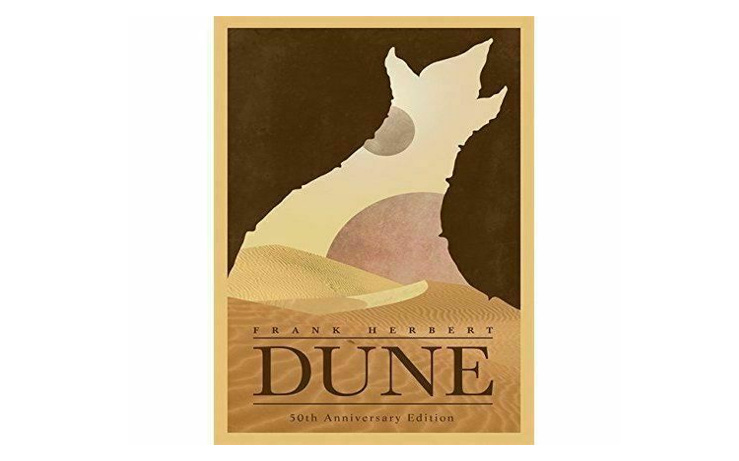
Let me share a story of a desert planet, an evil emperor, and a boy with a galactic destiny entwined with warring noble houses. Sounds a lot like ‘A New Hope’ no? But this is a story that came before Star Wars, Matrix or Enders Game.
The golden age of science fiction was ushered in by works of Frank Herbert (Dune series), Issac Asimov (Foundation and Robot Series), and Orson Scott Card (Enders Game Quartet). Dune, originally published in 1965, is considered by many to be the greatest novel in the Science Fiction canon and has sold in millions around the world. I wanted to read this book before the movie starring Timothée Chalamet is released (so I can painfully relieve Hollywood destroying another sci-fi classic)
Dune is set in the far future where the galaxies are controlled by a despotic emperor and multiple warring houses. The universe has three major powers keeping everything in check 1) Imperial House - throne of the galactic emperor 2) Landsraad - noble houses and 2) the Spacing Guild that controls travel through space. Amongst others, there’s also Bene Gesserit - a mystical school that only takes in women and teaches them superhuman physical and mental intuitive powers (let’s call them Jedi Knights - we now know where George Lucas got the idea). Bene Gesserit also undertakes selective breeding which is part of a larger agenda to birth a powerful prophet (the chosen one).
This is a futuristic technologically advanced era that has eliminated all computers after the bloody war between Man and Machines (passing a decree declaring "Thou shalt not make a machine in the likeness of a man's mind"). Without computers, the operational premise of the galaxy is still medieval and feudal with heavy reliance on men and their abilities.
Lots of thriller potential right there.
Our story begins with the noble house of Atreides (at-ree-ayy-diz) moving to take control of the Planet Arrakis at the behest of the Galactic Emperor. Arrakis is a desert planet with incredibly scarce vegetation and water but also the only home to the spice: Melange. Melange drives intergalactic travel, prolongs life, bestows heightened awareness, and can unlock prescience. Safe to say melange is the modern-day equivalent of oil. It drives everything and everyone has vested interests in it.
But first a little something about Arrakis..
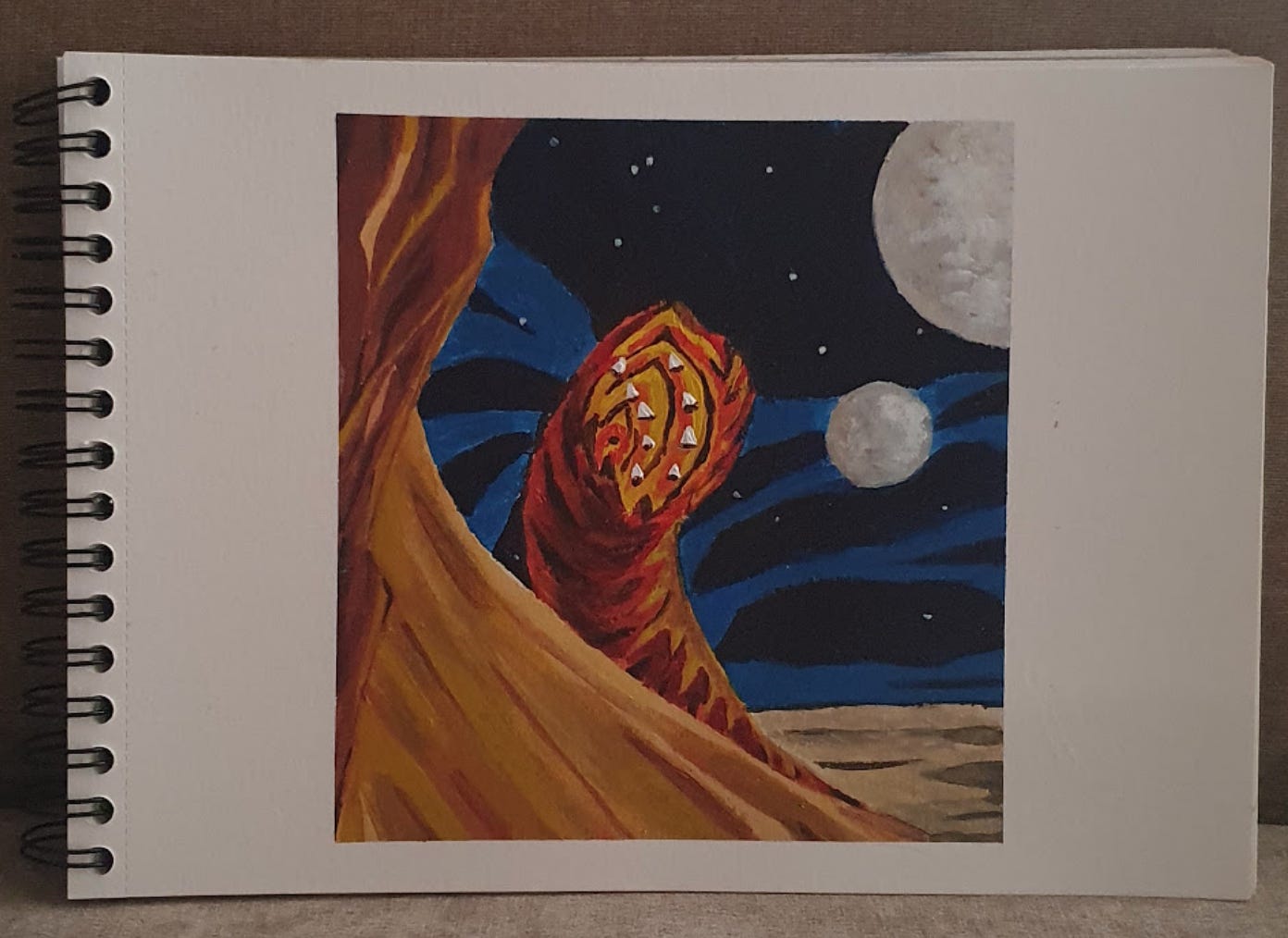
..Arrakis (also knows as Dune) is a desert wasteland with so little water that its inhabitants have to wear a full-body StillSuit that captures body moisture (perspiration/urine) and recycles reclaimed water for re-consumption. Arrakis is also marked by electrically charged sandstorms and sandworms that guard the spice in the desert. These sandworms are ginormous 200 meter long creatures that always come digging through the sand wherever spice mining happens.
The natives of Arrakis are the hardy warriors Fremen who are part of tribal culture living in the rocky formations that dot the sands of Arrakis. Their ethos is one of conservation, survival, and honor. They value water so much that crying for, or spitting on someone is an extremely high honor to bestow (because why would anyone waste body water like that) They’re looked upon by the foreign powers with suspicion and disdain.
Back to the plot..
..the house Atreides led by Duke Leto is beset by threats and conspiracies from all ends. The duke and his forces are at defensive from the day he lands on Arrakis. His rivals at House Harkonen want to destroy him and reclaim Arrakis along with its spice profits. Whats follows are political mind games and Machiavellian maneuverings that are reminiscent of the game of thrones (with a little less gore and a lot more lasers).
In the wake of treachery and tragedy, the duke’s young son Paul survives a bloodbath and flees into the hostile open desert, accompanied, by j̶e̶d̶i̶ ̶k̶n̶i̶g̶h̶t̶ ̶his mother. From an early age, Paul has been showing signs of a kind of cosmic prescience, and people suspect that he may even be the messiah of ancient prophecies. The ancient prophecy foretells the messiah will possess the ability to tap the minds and lives of all genetic ancestors (Avatar?) as well as the ability to fold time and space (If Dr. Strange and Yoda had an unholy love child?) and become the eye of time. His mother, Jessica, is an initiate of the religious sisterhood of Bene Gesserit. The sisterhood has engaged in selective breeding and eugenic programming over millennia of which Paul may be the culmination.
Noice. 10/10 should read
The underlying theme of Dune is ecology and the relationship of the desert with the spice, the spice with the sandworms, and the sandworms with the desert. Beyond all the political intrigue is the concept of a galactic economy being dependent on one very scarce resource.
The complexity and depth of Frank Herbert’s universe are so vast that it’s unbelievable. His character and universe building is incredibly detailed and non-repetitive. Religion, culture, politics, dynamics of power, effects of colonialism, and blatant destruction of the environment are themes that run parallel to the intensely exciting and labyrinthine plot. He shows how myth-making and religion are so paramount to sustain power over long periods because man as a political animal alone is completely bare. The religious wisdom in the book (drawing heavily from Arabic traditions and culture) is profound. Reading dune was unlike reading any one-directional plot.
After the first Dune book, Frank Herbert wrote five prequel Dune books (that I will likely read) and his son wrote another thirteen after Franks death (that I will likely not read)
Every fantasy reflects the place and time that produced it. If The Lord of the Rings is about the rise of fascism and the trauma of the world war, Enders game is about human trafficking and child labor, and Game of Thrones about cynical politics and neoliberalism, then Dune concerns – environmental stress, human potential, altered states of consciousness, democracy, and the developing countries’ revolution against imperialism.
Books read differently as the world changes over the decades, and Dune of 2020 has geopolitical echoes that it didn’t in 1965, before the oil crisis and 9/11, middle east conflicts, and pandemics. In writing something expansive that still echoes over decades to fans - Frank Herbert achieved the pinnacle of what a sci-fi author aspires to rise to; authentic world-building.
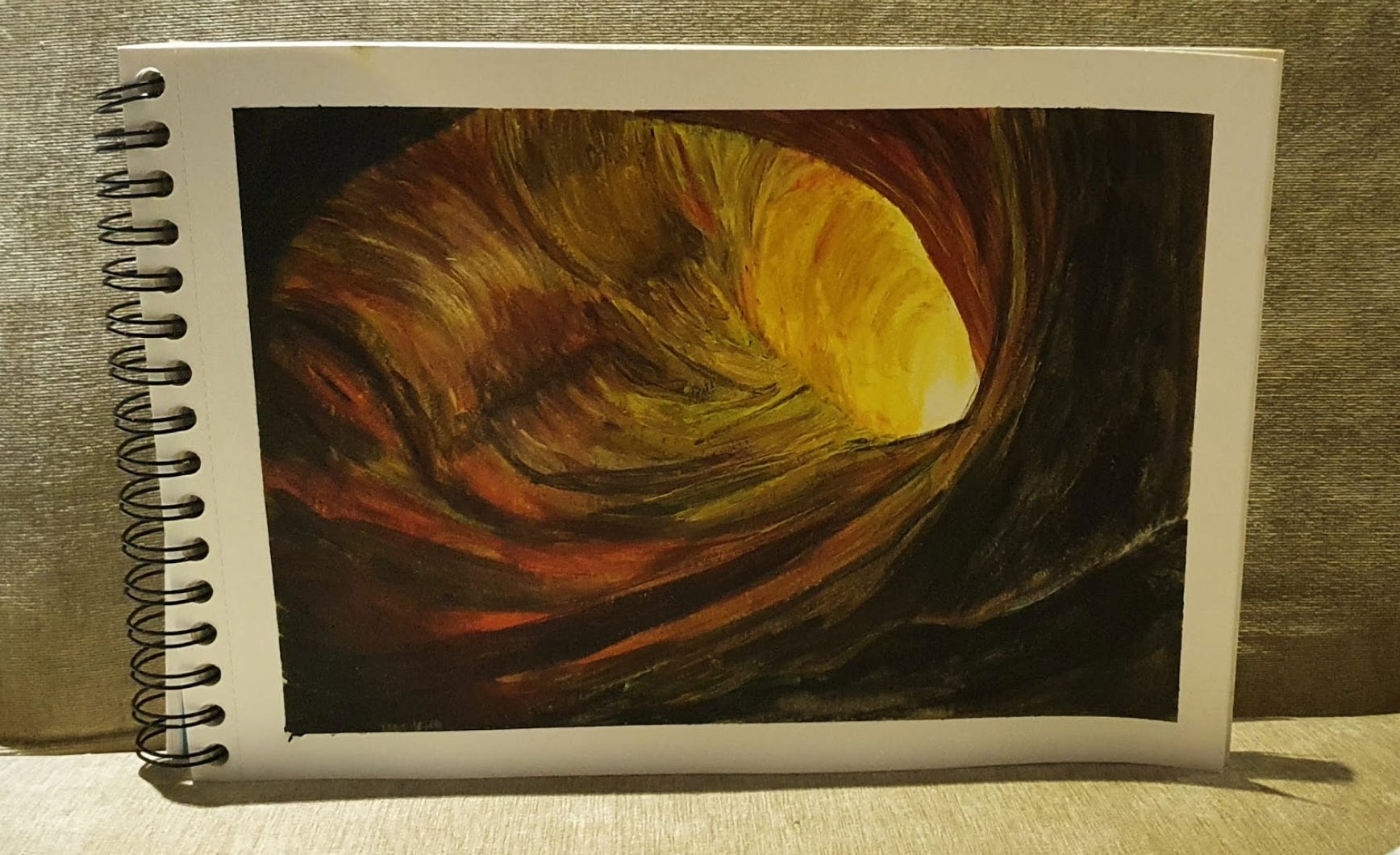
I enjoyed the vivid descriptions in Dune so much that I painted two of them. (1. Dune Cave and 2. Dune Sandworm)
The battle of Somme - 1916
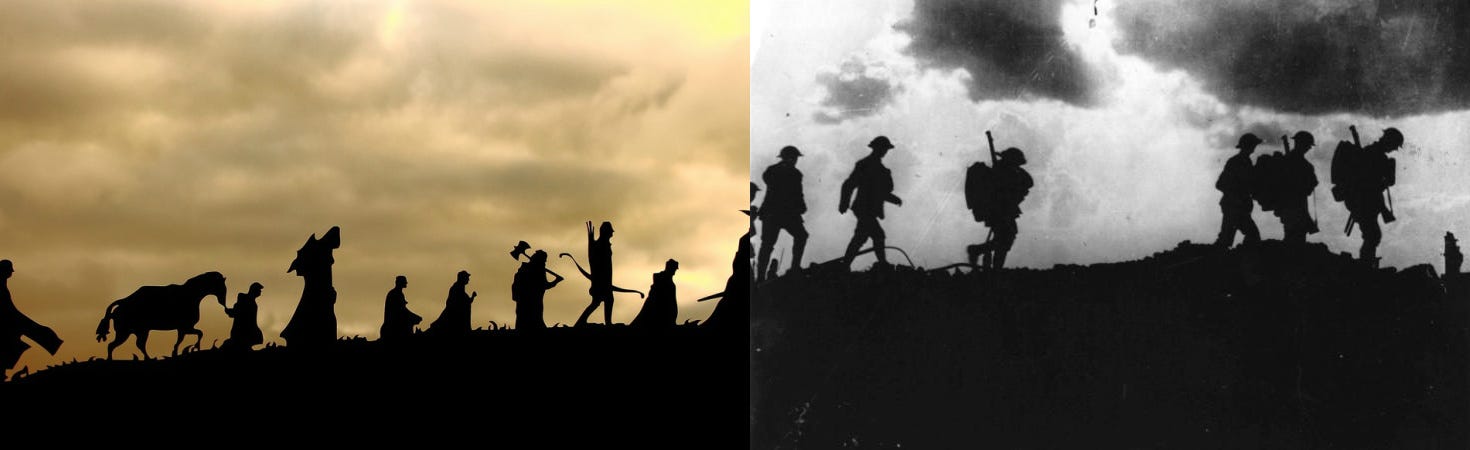
1st July marked 100 years since the start of the Battle of the Somme. It was the bloodiest battle of the first world war and the 20th century. Over 1.5 million soldiers on both sides lay dead after the battle concluded.
Amongst the combatants was a young J.R.R. Tolkien, Adolf Hitler, Otto Frank ( the father of Anne Frank), Harold McMillan (the future PM of UK), Winston Churchill and Robert Graves ( famous for Goodbye to All That, one of the most enduring memoirs of the First World War and the Somme in particular.)
J.R.R. Tolkien was one of the fortunate men who came home from this battle. He escaped from the wars haunting experience by writing and creating a world that has continued to endure for generations. It shaped his beloved epic, the Lord Of The Rings.
Reaching the front shortly after the offensive began, Tolkien served for four months in the Picardy region of France. In the rent earth of the Somme Valley, he laid the foundation of his epic trilogy. He began writing the first drafts of Middle-earth by candlelight in bell-tents and in dugouts under shell fire.
The battle scenes in The Lord of the Rings are reminiscent of the grim memories of the trenches: relentless artillery bombardment, mustard gas, and bodies of dead soldiers discovered in craters of mud.
The heroism and tenacity of his characters were inspired by the qualities he observed among his comrades.
"I have always been impressed that we are here, surviving, because of the indomitable courage of quite small people against impossible odds,” he explained. The Hobbits were “a reflection of the soldier,” made small of stature to emphasize “the amazing and unexpected heroism of ordinary men ‘at a pinch.’ "
To read more about WW1 and its influence on Tolkein’s work: NYT’s How J.R.R. Tolkien Found Mordor on the Western Front.
For anyone interested in WW1, here’s a youtube channel I found earlier this week: The Great War. The Great War covers the First World War from 1914 to 1923 – in real-time between 2014 to 2023. Every other week, it touches the important events that influenced the world 100 years ago (World War 1 on a weekly basis)

This Newsletter was late because my writing nook was under siege by these two.

Stay Safe
Saima